


The gap between seeing clearly and moving is where most people live permanently
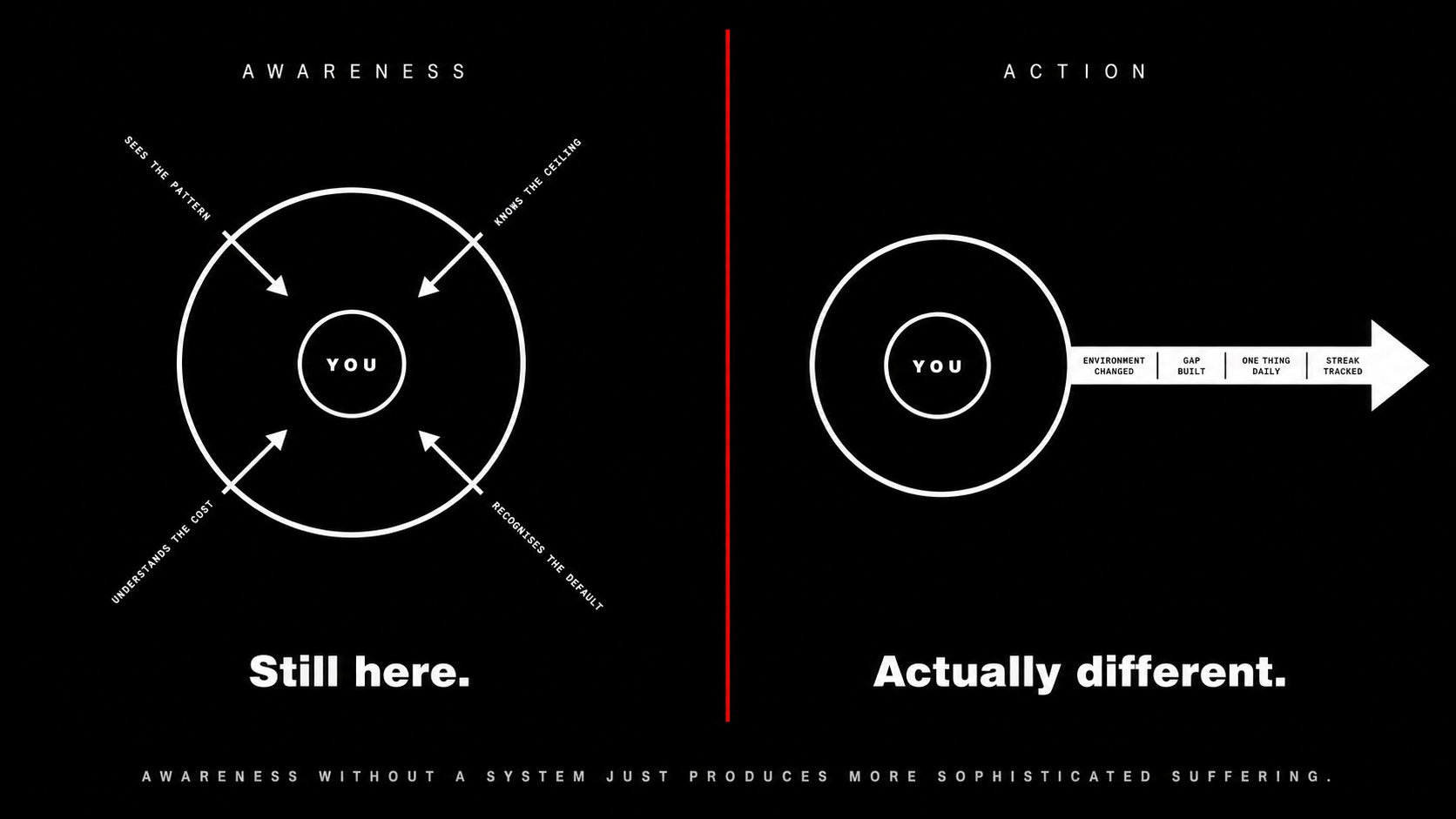
Most people are not stuck because they lack awareness.
They are stuck because awareness without a system just produces more sophisticated suffering.
You can see the pattern clearly.
You know the ceiling is installed not structural.
You understand that the default trajectory leads somewhere you do not want to arrive.
And then you do nothing.
Not because you are lazy.
Not because you do not care enough.
Because seeing the problem and solving the problem are two completely different skills and most advice stops at the seeing.
This essay is about the solving.
Note: This essay follows on from last week. If you missed it you can read it here first. This one will make more sense if you do. But it also stands alone if you want to start here.

Step one. Make the cost of staying visible every single day
The anti vision works because it makes the future concrete.
But most people do the exercise once and let it fade.
The cost of staying the same has to stay visible. Not as punishment. As information.
Write one sentence. The most honest version of where the default trajectory ends. Not vague failure. The specific version.
Put it somewhere you see every morning.
Not as motivation. As orientation.
The person who knows exactly where they are heading if nothing changes makes different decisions than the person who knows abstractly that things need to change.
The specificity is the whole mechanism.
Vague discomfort produces vague action.
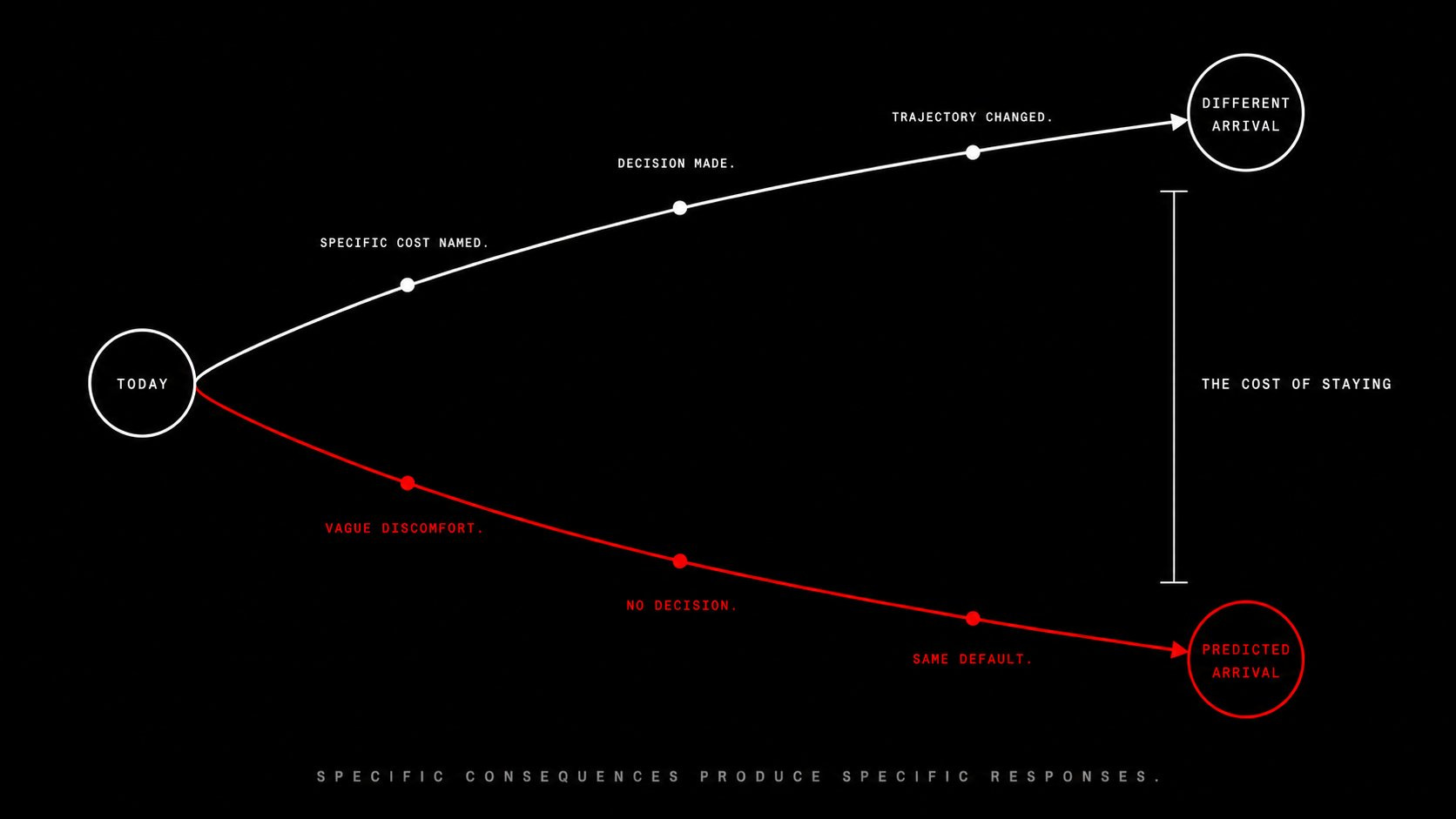
Specific consequences produce specific responses.
Step two. Design the environment before you feel ready
You cannot think your way into a different identity.
You can only build your way into one.
And building requires a different environment than the one that produced the current version.
This is not metaphorical.
Change what you consume first. Before the new identity feels natural. Before you feel like the person those inputs belong to.
What you read every morning.
What you listen to while you move.
What you allow to occupy your attention in the first hour of the day.
All of it is either reinforcing the current version or building toward the next one.
Most people wait until they feel like the new person before changing the inputs.
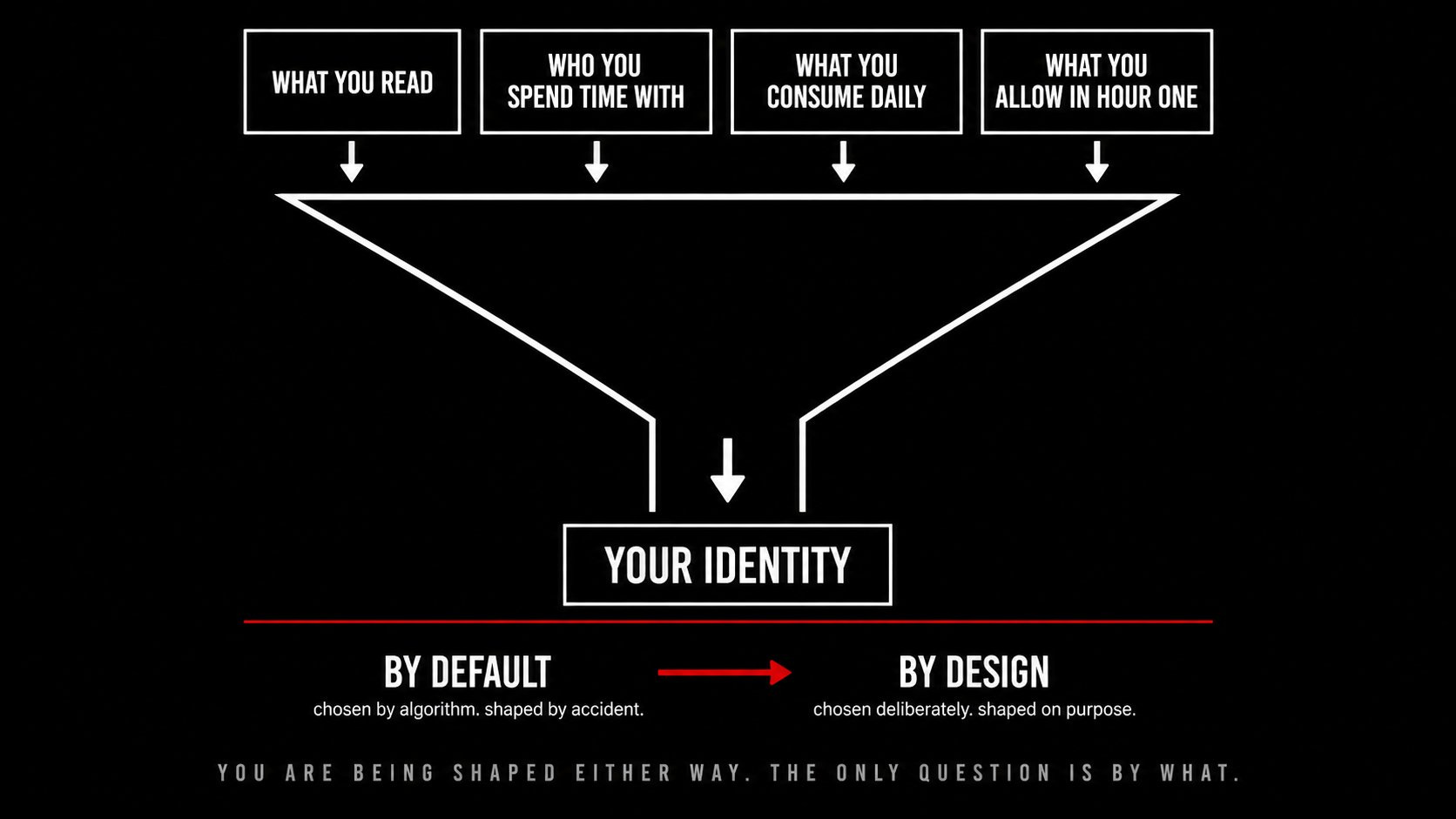
The inputs are what produce the feeling.
Change them first.
The feeling follows.
Then change who you spend the most time around. Not dramatically. Not by cutting people off.
Just be honest about which relationships are expanding what is possible for you and which ones are contracting it.
Spend more time with the first kind.
The environment shapes the identity faster than any decision you make inside the old environment.
Step three. Build the gap before you need it
The old patterns do not disappear because you decided to change.
They reassert themselves in the moments you do not see coming.
The impulse arrives and the old behaviour follows before you have had a chance to choose differently.
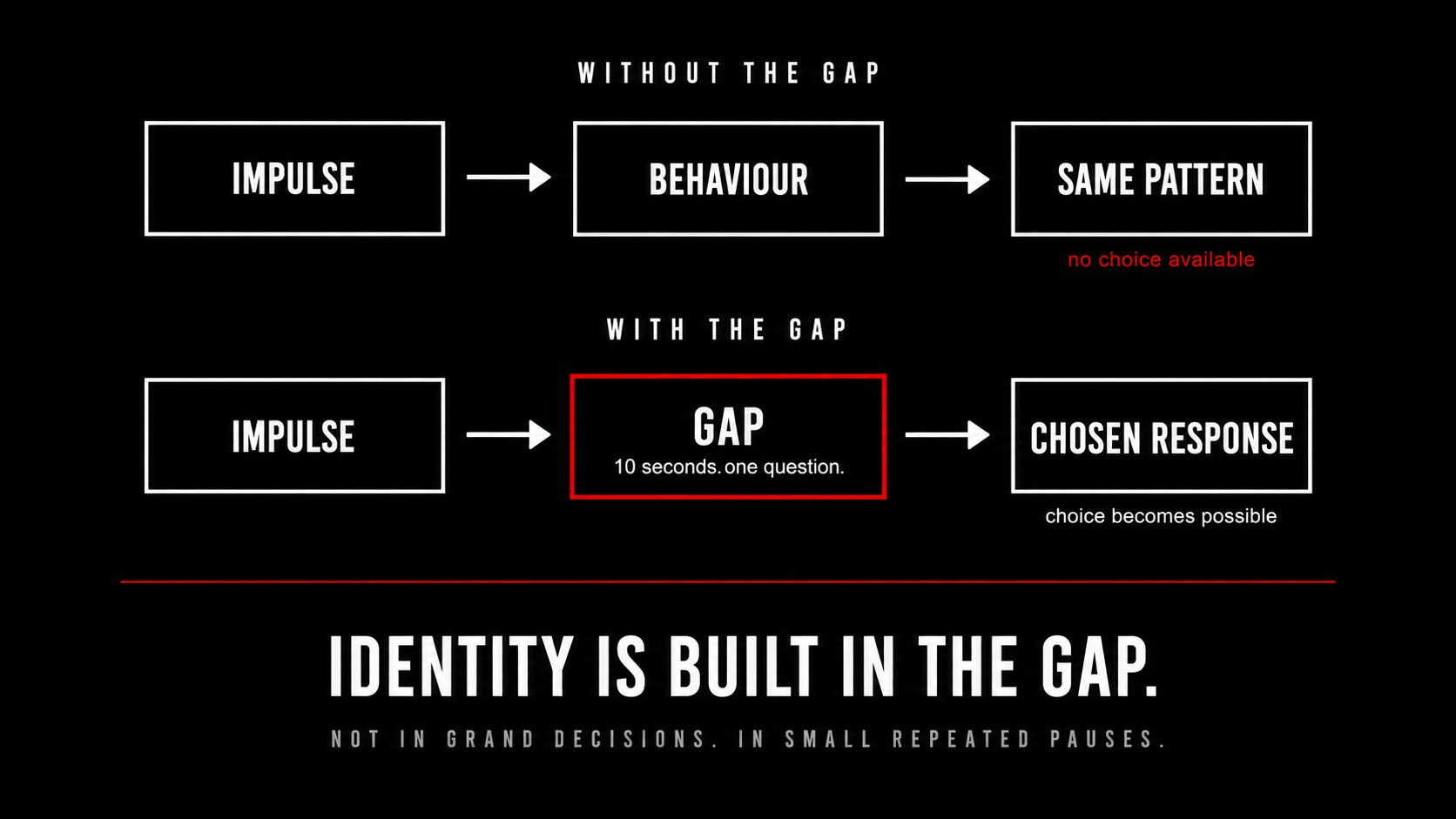
The only way to interrupt this is to build a gap between the impulse and the response before the impulse arrives.
One practice. Simple. Unglamorous.
When the impulse comes. Any impulse that belongs to the version of yourself you are leaving behind. Pause for ten seconds before acting on it.
Not to suppress it. Not to fight it.
Just to create enough space for a single question.
Is this the person I am becoming or the person I am leaving behind.
That question does not require willpower.
It just requires the gap to exist.
The gap is built through repetition. Through noticing the impulse before acting on it enough times that the noticing becomes automatic.
Ten seconds is not dramatic.
But ten seconds applied consistently to the moments that matter most changes the pattern faster than any big decision ever could.
Step four. Choose one thing and do it before it feels right
Most people are waiting to feel ready before they start.
Ready is not a feeling that arrives before you act.
It arrives after.
Which means the sequence most people are following is backwards.
They are waiting for the identity to arrive before taking the actions that build it.
The identity is built by the actions.
Not before them.
Choose one thing. The most specific version of the direction you are moving in.
Not a goal. An action.
Not I want to be healthier. I move for thirty minutes every morning before the day takes over.
Not I want to build something real. I write for one hour before I open anything else.
Not I want to change my financial situation. I spend thirty minutes every week building the thing that will eventually not need the job.
One action. Specific. Small enough that the old self cannot justify skipping it.
Do it before it feels like you.
Because it will not feel like you yet.
It will feel like you are performing a version of yourself that does not quite exist.
That feeling is not a sign it is wrong.
It is a sign it is working.
The identity catches up to the actions.
Not the other way around.
Step five. Track the streak not the outcome
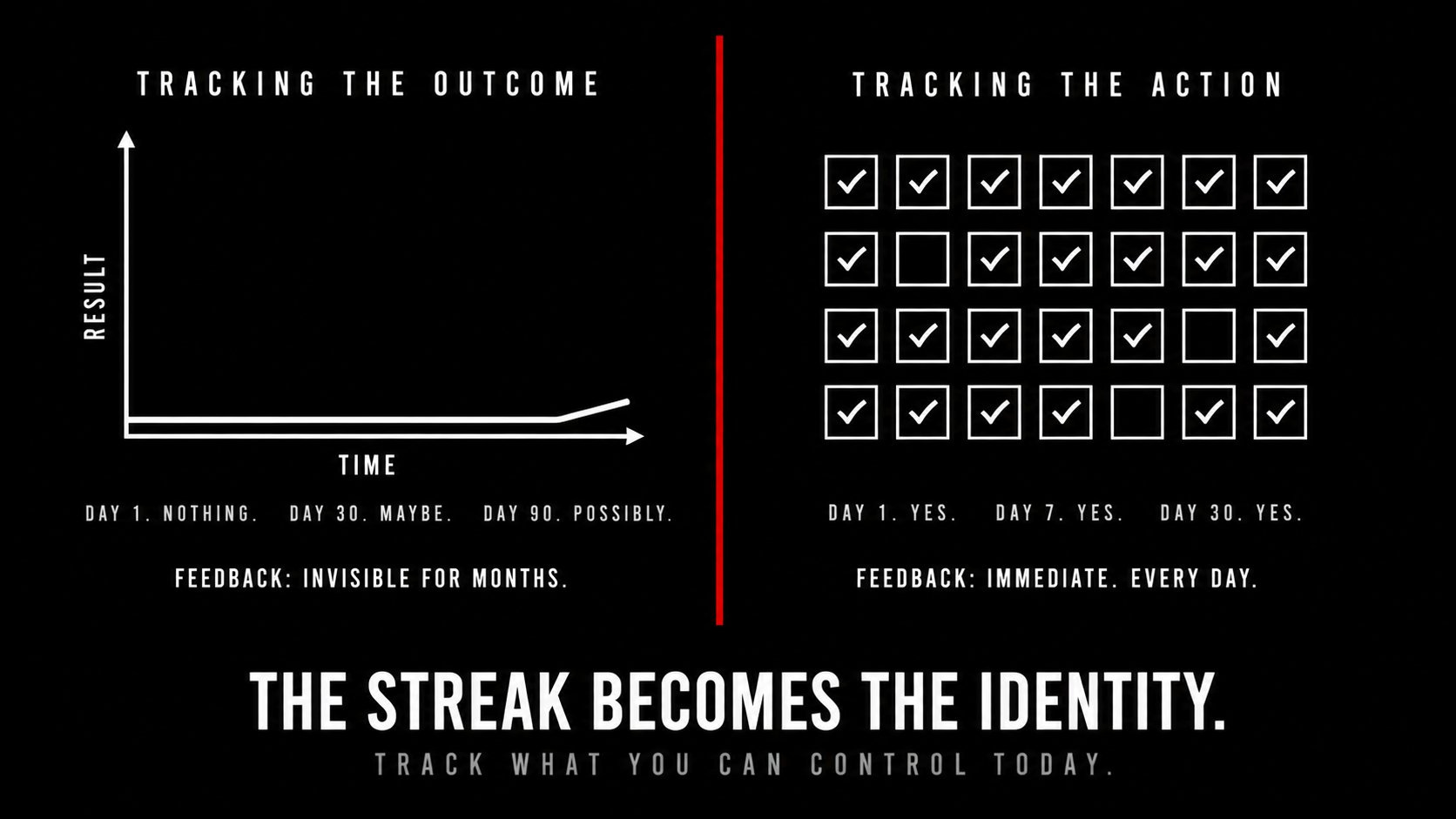
The outcome is too far away to motivate the daily action.
The person who is trying to lose twenty kilos in six months has no feedback on day one.
The person who is tracking whether they moved today has immediate feedback every single day.
Track the action not the result.
Not because the result does not matter.
Because the result is downstream of the action and the action is the only thing you actually control today.
One question at the end of every day.
Did I do the one thing.
Yes or no.
That is the whole tracking system.
Not a journal. Not a habit app. Not a complicated system that requires maintenance.
Just the honest answer to one question every night.
The streak becomes the identity.
After thirty days of yes you are no longer someone trying to change.
You are someone who does the thing.
That shift is quieter than most people expect.
And more permanent than any motivation they have ever felt.
Step six. Expect the reassertion and plan for it
At some point in the next thirty days the old version will come back.
Not as a dramatic relapse. As a reasonable argument for why today is the exception.
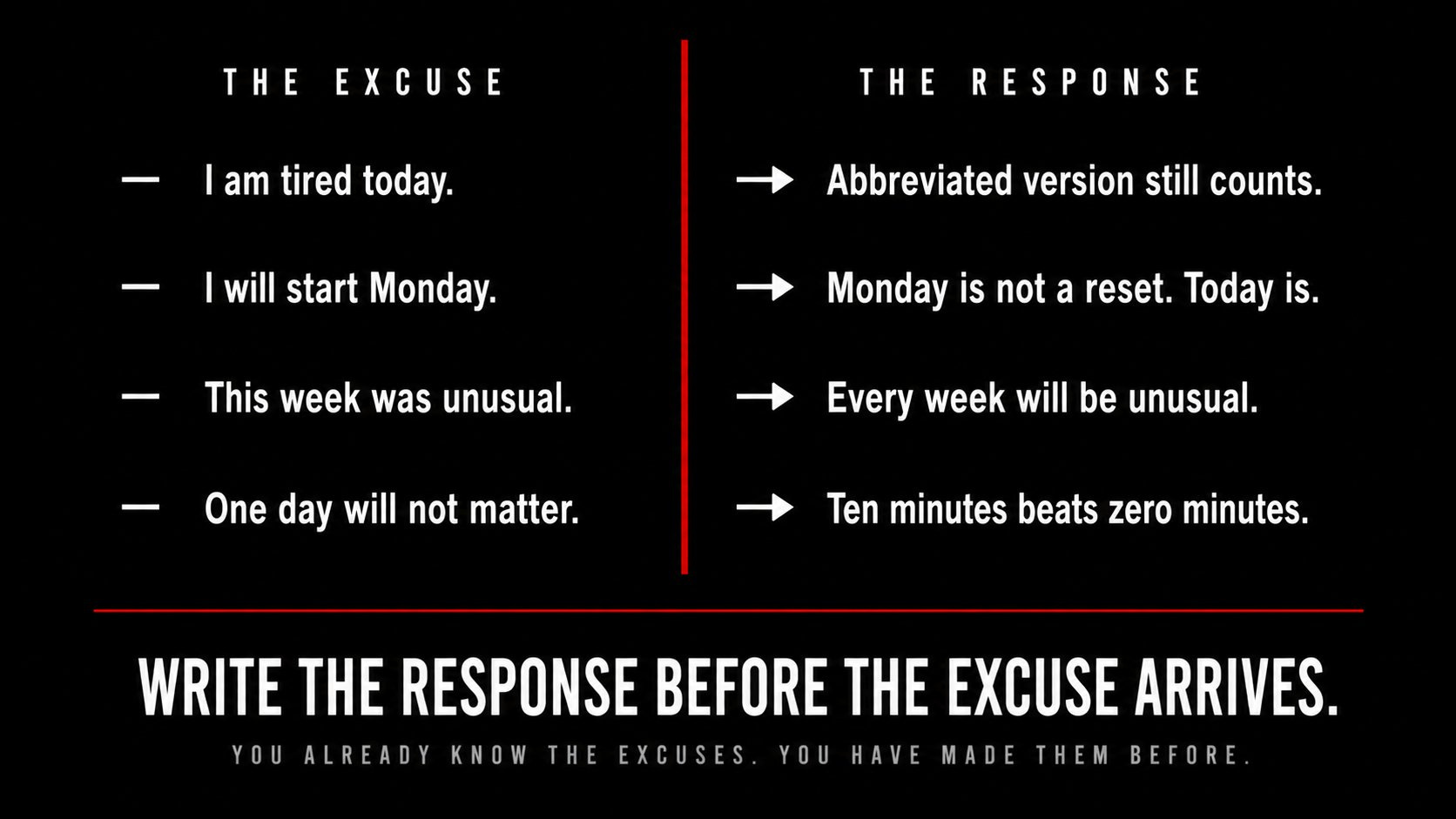
I am tired today. I will start properly on Monday. This week has been unusual. One day will not matter.
The old self is not stupid.
It makes the exception sound reasonable because it knows that if the exception sounds unreasonable you will not take it.
Plan for this now.
Before it happens.
Write down the specific excuses you already know you will make.
Because you already know them.
They are the same ones you have made before.
Then write one line next to each one.
The response you will give yourself when the excuse arrives.
Not a motivational response.
A practical one.
I am tired today. I do the abbreviated version not the full version. Something always beats nothing.
I will start properly on Monday. Monday is not a reset button. Today is still today. Ten minutes of the thing still counts.
This week has been unusual. Every week will be unusual for the rest of your life. The action has to survive unusual weeks or it does not actually exist.
The conversation with yourself has already happened a hundred times.
Write the ending you actually want before the beginning starts.
The honest version of what this produces
Not a transformed life in thirty days.
Not the arrival of the version of yourself you have been building toward.
Just a different starting point.
The beliefs that were running unconsciously start to become visible.
The patterns that were automatic start to become choices.
The environment that was shaping you by default starts to become something you are shaping on purpose.
And the version of you that exists at the end of thirty days has something the version that started did not.
Evidence.
Not proof that you have arrived.
Proof that you can change.
That evidence is the most durable thing this process produces.
Because it does not disappear when the motivation fades.
It does not evaporate when the circumstances get difficult.
It is just there.
A fact about yourself that you earned rather than believed.
And facts earned through action compound in ways that beliefs adopted through reading never can.
Start today.
Not Monday.
Not when the circumstances are right.
Today.
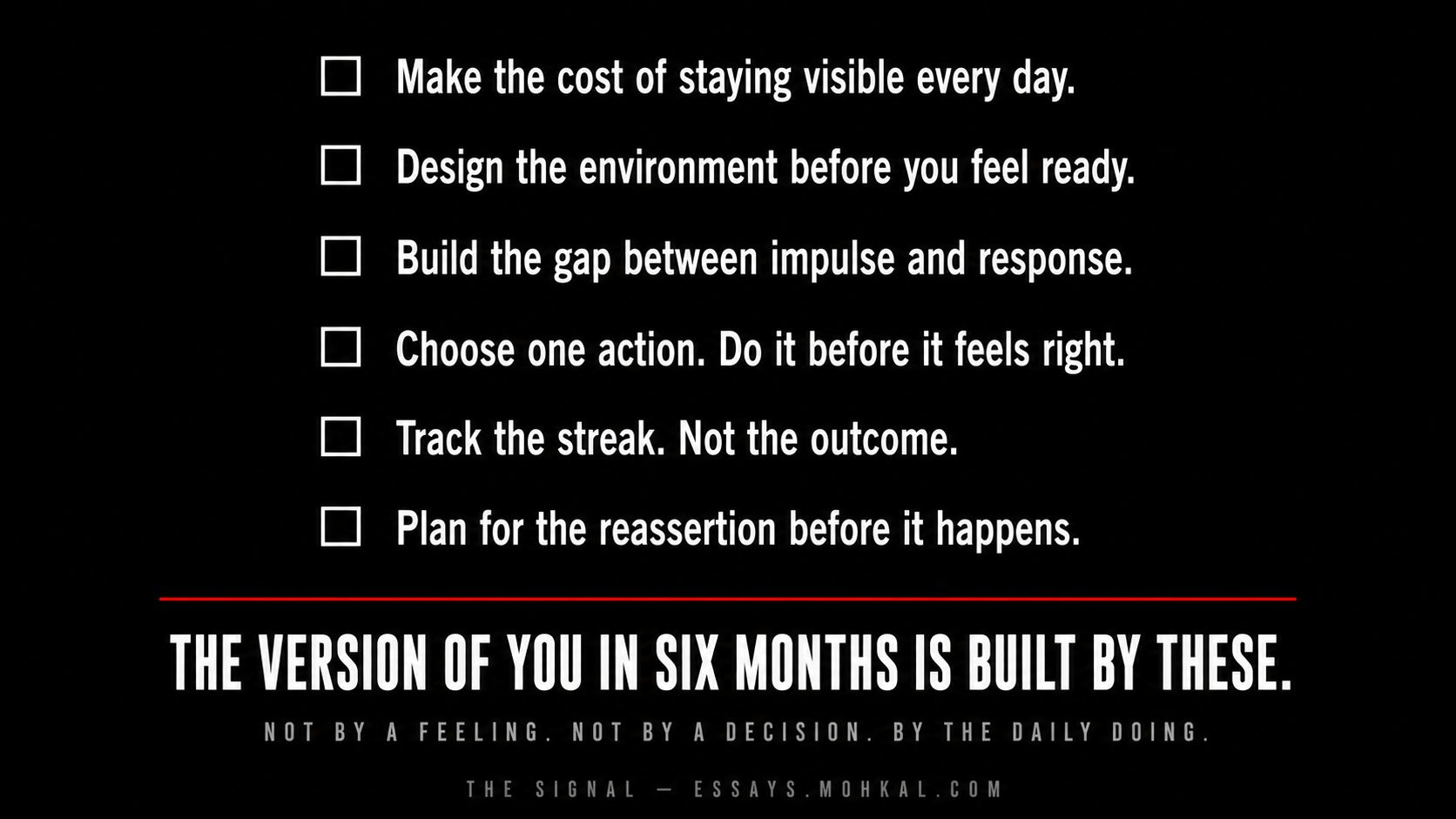
The version of you that exists in six months does not care what day you started.
Only that you did.
🔗 Signal Links
Not everything earns attention. These did.
Why You Can’t Stick to Habits — Dr. Andrew Huberman — The neuroscience behind why habits fail is simpler than most people think. Not willpower. Dopamine timing. This changed how I think about the gap between impulse and response in a way no productivity book ever did.
Designing Your Environment for Success — James Clear — The most underrated insight in behaviour change is that you do not rise to the level of your goals. You fall to the level of your systems. This article is the shortest version of that argument I have found.
Focusmate — Body doubling as an accountability system. You book a session. A stranger shows up. You both work silently for fifty minutes. The social pressure of another person watching removes every excuse the old self generates. Simple. Unglamorous. Works.
The War of Art — Steven Pressfield — The whole book is one argument. The resistance you feel before doing the work is not a sign to stop. It is a sign you are close to something real. Read the first fifty pages and you will never call your avoidance tiredness again.