

The Version of You That Was Built by Accident
Most of what you call yourself was never chosen

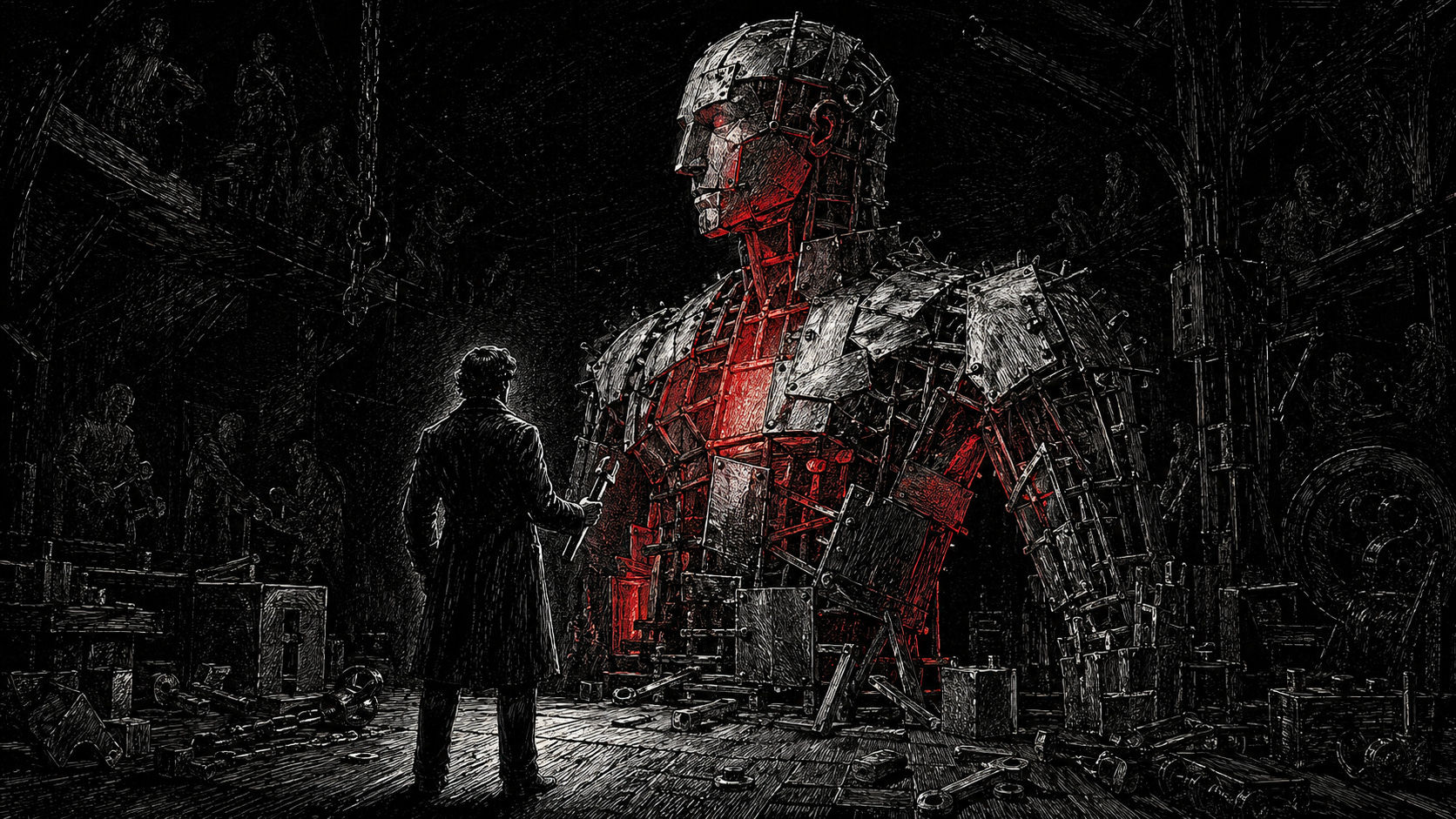
You did not design yourself. Nobody does.
By the time you had the ability to question what you believed about yourself, most of it was already decided. Not by you. By whatever was closest. Whatever was loudest. Whatever happened to be present in the years when you were most impressionable and least equipped to push back.
You absorbed it the way you absorb an accent. Without trying. Without noticing. And then one day you woke up inside it and called it yourself.
Here is the strange part. Most of what you think of as your personality is not really yours. It is a set of adaptations. What got rewarded. What got punished. What was ignored. What was modelled by people who were themselves running patterns they had never examined.
You did not develop beliefs. You inherited them.
The invisible ceiling
The most expensive part of all this is not the beliefs themselves.
It is that they stop feeling like beliefs.
A belief you can see is a belief you can question. But when a belief runs long enough it becomes automatic. At that point it does not feel like a belief anymore. It feels like reality. You do not think I am not capable of that. You just do not try. You do not think I need permission. You just wait.
That is when the inherited version starts making your decisions for you.
Not dramatically. You will not notice it happening. It just feels like caution. Or realism. Or knowing your limits. The ceiling feels structural rather than installed. And structural ceilings are easy to accept because they seem like facts rather than choices.
But most ceilings are not structural.
They are old.
Why this is not a blame story
There is a temptation to trace it all back to specific people and specific moments.
Resist it.
The people who shaped you were also shaped. And the people who shaped them were also shaped. It goes back further than any useful accounting can follow. None of them were trying to install limitations. They were just living. Reacting. Passing on what was passed to them.
The past explains the system. It does not fix it.
At some point you are the one operating it. That is where responsibility begins. Not emotionally. Functionally. The question is not who built the system. The question is whether you are going to keep running it without looking at it.
What you actually inherited
Here is the thing most people miss when they think about this.
The inheritance was not only limitation.
The person who grew up without guidance did not get less than the person who had it. They got something different.
The person who had to figure things out alone built an internal structure that the person who always had someone to ask never needed to build.
The person who moved through a world that did not make space for them learned to make their own space. That is a different kind of intelligence. Harder to develop. More durable once built.
The absence produced something.
Not better than what the presence would have produced. Just different. And in some cases more permanent.
The accidental version contains both. The limitations installed by people who did not know what they were building. And the specific capacities forged by having to navigate those limitations without help.
Both are in there.
The work is not to destroy one and keep the other. It is to see clearly which is which.
The question that cuts through it
There is one question that works better than any other for finding what was installed versus what is actually yours.
Why do I not try that.
Not the polished answer. The honest one. The thing underneath the polished answer that you have been treating as a fact for so long that examining it feels strange.
That thing is almost always old.
And old is not the same as true.
What changes after you see it
You do not become someone else.
You stop operating blindly.
The decisions become less automatic.
The direction becomes less inherited.
The version of yourself that shows up starts to feel more chosen and less assigned.
That is not a dramatic transformation. It does not arrive in a single moment. It is just the slow process of subtracting what is not yours until what remains is something you would actually choose to keep.
You do not start from zero.
You start from influence.
Then you subtract what is not yours.
Until what remains is yours to build from.
That is where agency begins.
Not in control. In clarity.
Kal
🔗 Signal Links
Not everything earns my attention. These did.
Writing Simply — Paul Graham on why complexity in writing is almost never sophistication.
Visualize Value — Jack Butcher turns ideas into images. The simplest visual communication on the internet.
Navalmanack — The most compressed version of how to think about wealth and freedom.