

The Plan Is Not What You Think It Is
You do not need the right plan. You need a plan honest enough to start walking.

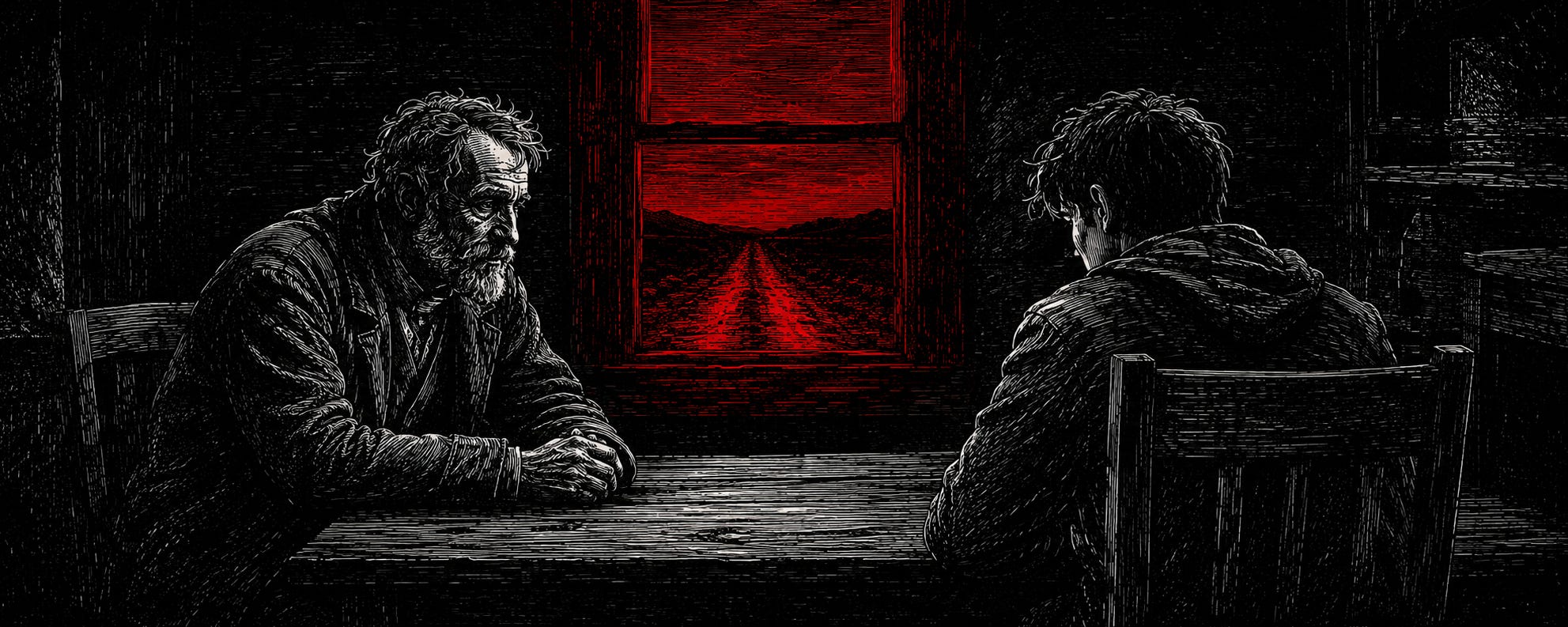
My father was not a man of many lessons. He did not have the time or the presence to deliver them with any regularity. The months I spent with him were few and the moments within those months where something real passed between us were fewer still. I was young enough to receive them badly. Arrogant in the way young people are arrogant, not from confidence but from inexperience dressed up as certainty. From not yet having been broken by anything significant enough to make me listen.
He said something I did not understand at the time. Whether he meant it as a lesson or not, that is what it became.
The value of planning.
I do not remember the exact words. I remember the feeling of not understanding why it mattered. I was at the age where the future felt like something that would sort itself out. Where planning felt like the concern of people who were afraid to live. Where the person sitting across from me, a man I barely knew, saying something in the limited time we had, was saying something I could hear but not yet receive.
I was not ready.
Life taught me what he could not.
Not because he was wrong. Because I had not yet lived enough to understand what he was right about.
This is the essay I would have written for him if I had understood it then.
It is probably too late for that.
It is not too late for this.
What planning actually is
Most people think planning is prediction.
It is not.
Prediction assumes you know what is coming. That the variables are fixed. That if you map the route correctly at the beginning the road will cooperate with the map you drew.
The road does not cooperate with anything.
Planning is not prediction. Planning is orientation.
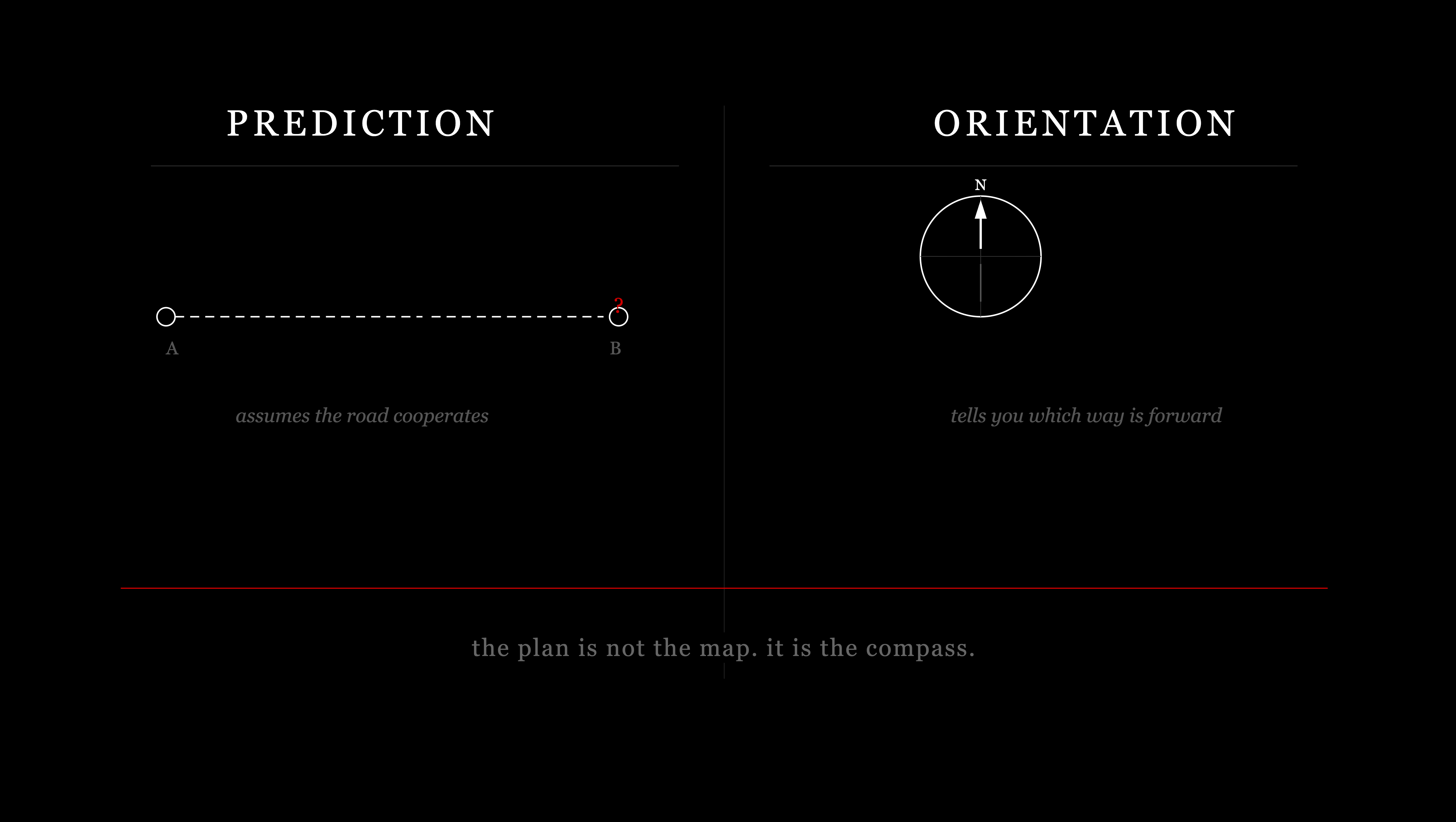
The plan does not tell you exactly how to get there. It tells you which direction is forward. It gives you a reference point against which every new piece of information, every changed circumstance, every unexpected development can be measured.
Without the plan you have no reference point.
Without the reference point you cannot distinguish progress from drift. Cannot know if the detour is a better route or a distraction. Cannot tell if the new opportunity that appeared is pulling you toward something real or just pulling you sideways because sideways felt more interesting than the direction you were already committed to.
The plan is not the cage most people think it is.
It is the opposite of that.
The plan is what makes you free to move, because you have something to move in relation to.
The first thing the plan gives you
Direction.
Not instructions. Not a guarantee. Not a promise that the steps you mapped will unfold in the order you arranged them.
Just direction.
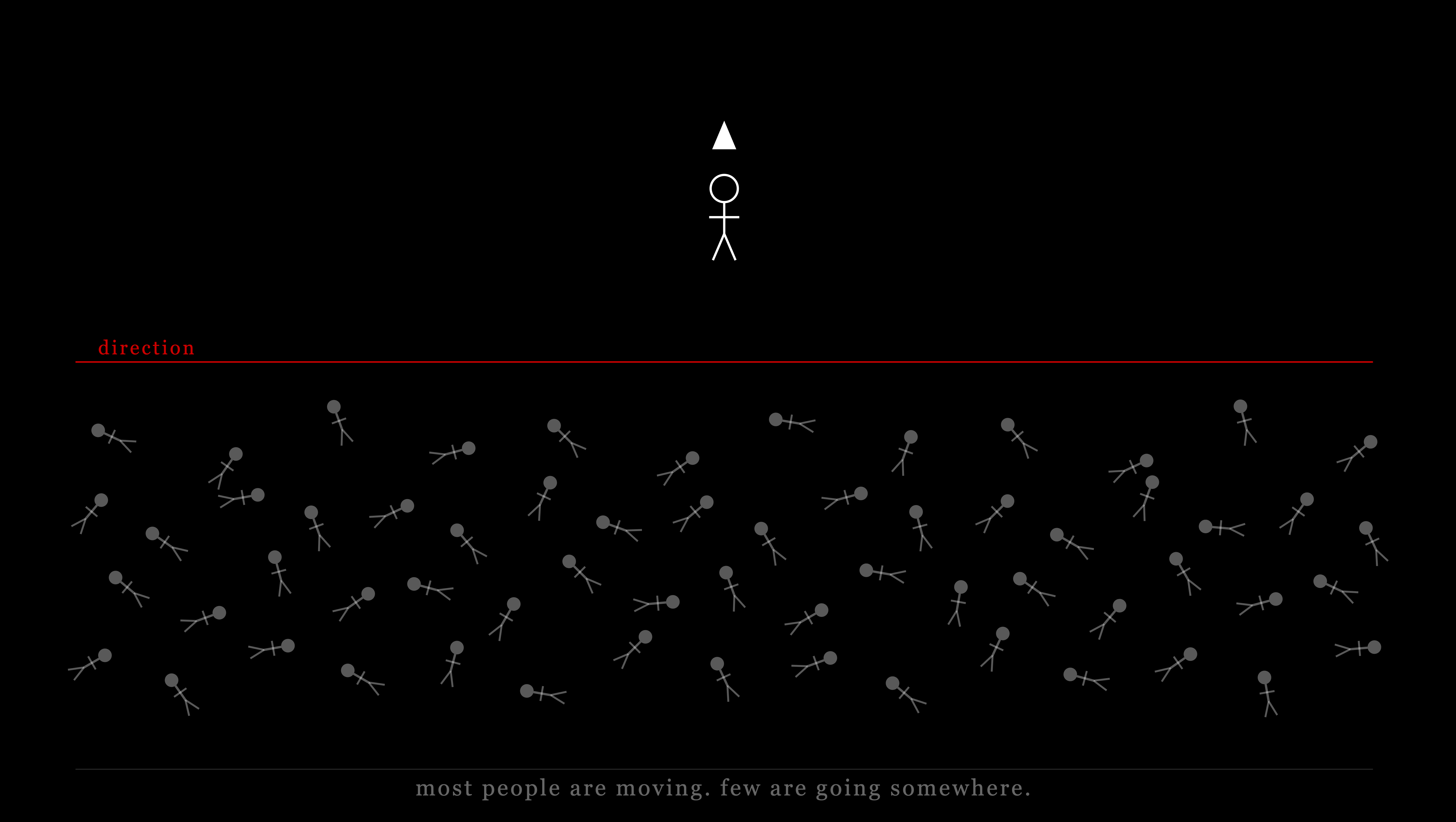
North. Or something close enough to north that when you look up from whatever is immediately in front of you, you can orient yourself. Know if you are still heading somewhere or just moving.
Most people underestimate what this gives them.
Because most people have never been truly directionless. They have been uncertain, yes. They have been confused about which path to take. But true directionlessness, the kind that comes from having no plan at all, no destination chosen, no direction selected, that is a different kind of lost.
It is the lost where every option looks equivalent because you have no frame to evaluate them against.
Where someone offers you something and you cannot tell if it is an opportunity or a distraction because you have no destination to check it against.
Where you move constantly but cannot tell if the movement is progress because you have no reference point against which to measure it.
The plan solves this.
Not by making the path clear. By making the direction clear.
Those are not the same thing.
The second thing the plan gives you
A thing to modify.
This is the part nobody tells you.
The plan is not supposed to survive contact with reality unchanged. It is supposed to meet reality, absorb the information reality provides, and update accordingly. The plan that arrives at the destination looking exactly like the plan that left is the exception, not the rule.
Most people experience the first deviation from the plan as failure.
It is not failure.
It is the plan working.
The plan is a hypothesis. A best available guess at the beginning, made with the information you had at the time you made it. As you move forward you gather new information. New skills. New understanding of the terrain between you and where you are going. That new information changes what the next best step looks like.
Updating the plan based on new information is not abandoning the plan.
It is using the plan correctly.
The word for this is not failure. The word is not pivot. The word is not even adaptation, which still carries the implication that something went wrong.
The word is modify.
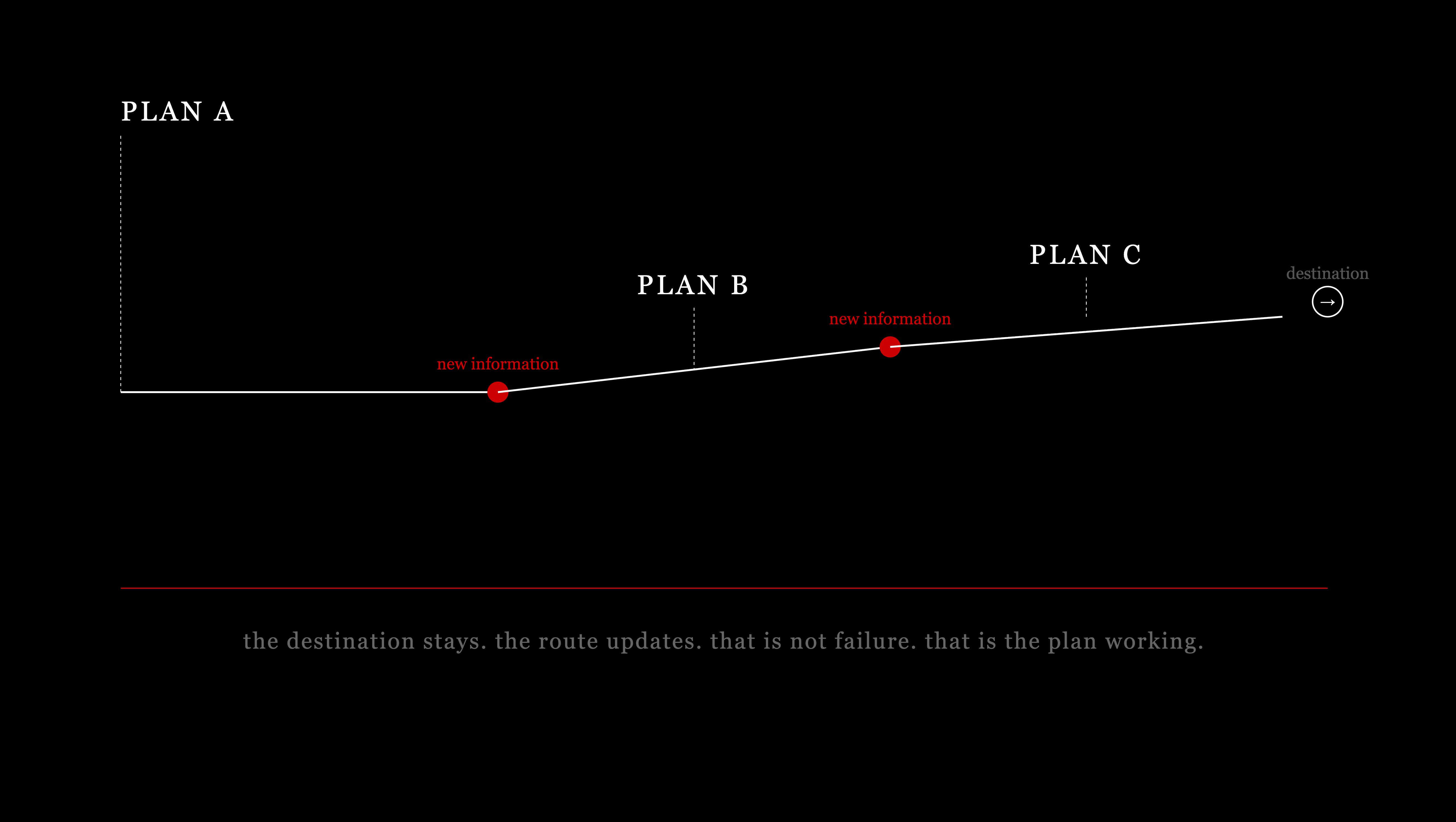
You modify the plan because you know more now than you did then.
That is not a crisis.
That is the whole point.
What I tried before I understood this
I have failed at more business models than most people have attempted.
Marketing agency. Web design. SaaS. Dropshipping. Print on demand. Rank and rent. Ecommerce. A leather brand built under my grandfather’s name that I shut down rather than compromise what it stood for.
For a long time I thought the problem was the model.
Change the model. Try again. Fail differently. Change the model again.
I was changing the vehicle thinking that was what was broken.
It was not the vehicle.
It was that I had no clear destination. No plan honest enough to measure each new attempt against. No reference point from which to evaluate whether the new model was a genuine step forward or just a different kind of moving sideways.
Without a plan everything looks like an opportunity because you have nothing to measure opportunity against.
With a plan, the question becomes simple.
Does this move me toward where I am going or away from it.
That is the whole filter.
I did not have the filter. I had the restlessness and the willingness to try and the inability to distinguish motion from progress because I had never committed clearly enough to a direction that motion could be measured against.
Whatever my father was trying to give me, it was the filter.
I was not ready to receive it.
The destination that changes
Here is the part nobody tells you about planning.
Sometimes the destination changes.
Not because you failed. Not because the original destination was wrong. But because you could not have known the real destination from where you were standing at the beginning.
You can only see certain things from certain distances.
The plan you make at the start is made from the beginning. From a position where you cannot yet see what you will see halfway through. Cannot know what you will know on the other side of the first real difficulty. Cannot understand what actually matters to you until you have chased something that did not matter and felt the specific hollowness of arriving somewhere that was not worth the journey.
The real destination reveals itself in motion.
Not before motion. In it.
Which means the only way to find the destination worth having is to start walking toward the one you currently think is right.
This is the thing I most want you to understand.
The plan you start with is not the plan you will finish with. The destination you choose today may not be the destination you arrive at. The path will deviate. The map will need redrawing. The thing you were certain about at the beginning will look different from the middle and different again from closer to the end.
None of that is failure.
All of that is the plan working exactly the way a plan is supposed to work.
But only if you started walking.
The person who waited for the perfect plan before beginning never discovered any of this.
They are still at the beginning. Still refining. Still adjusting the plan that has never met reality because they never gave it the chance to.
You cannot find the real destination from the couch.
You can only find it by walking toward the one you have now and letting the journey show you what you could not see before you began.
Why the principle was right
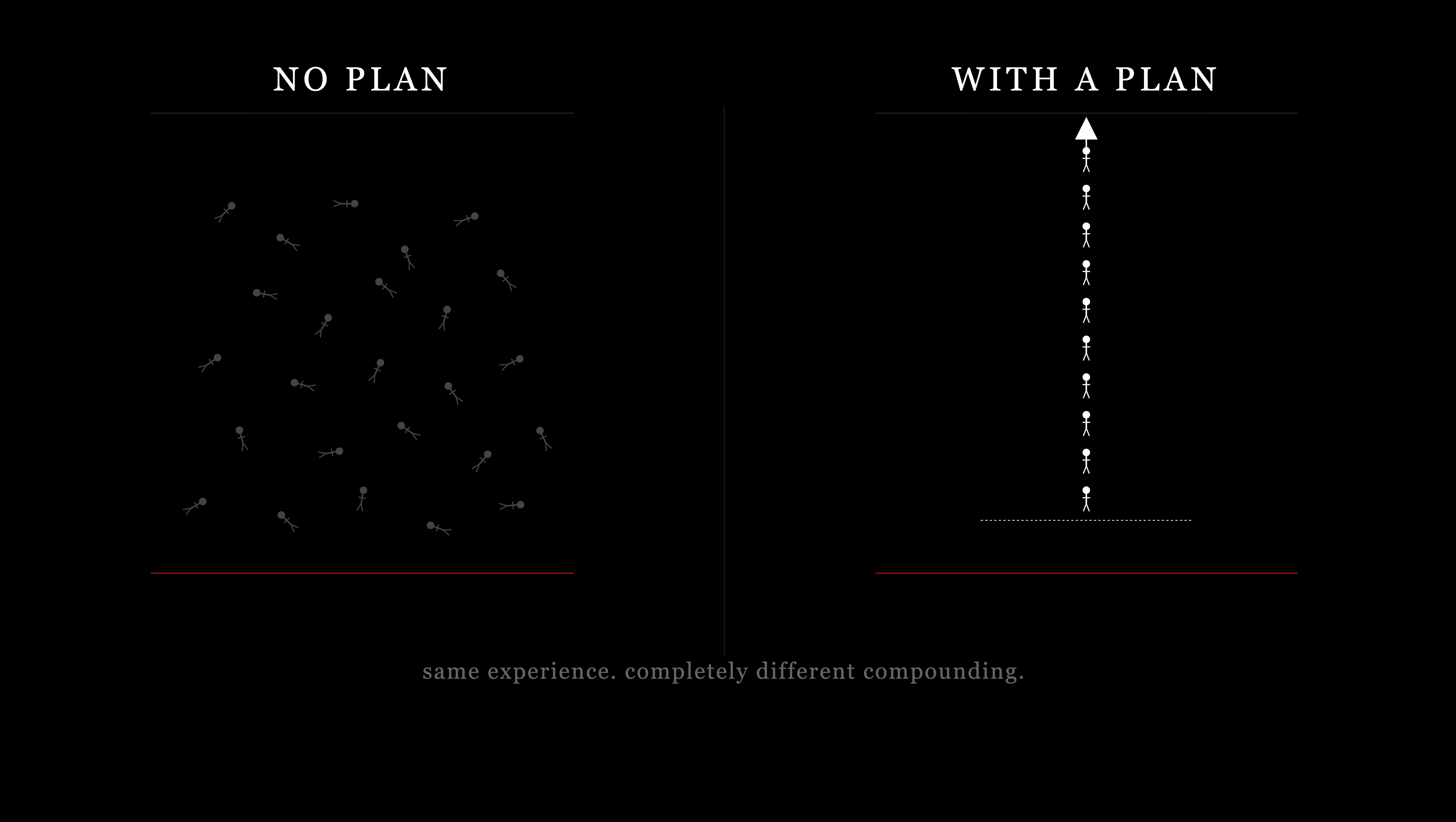
A person without a plan is not free. They are available.
Available to be moved by whatever comes along. By whatever opportunity appears loudest. By whatever person makes the strongest case for their direction. By whatever the circumstances of the moment seem to be suggesting.
The plan is not a restriction on freedom.
The plan is the thing that makes freedom possible.
Because freedom without direction is just drift with better stories about itself.
I know because I lived it. Years of trying and moving and attempting and failing and none of it compounding the way it should have because none of it was anchored to a clear enough destination that the lessons could accumulate in a useful direction.
Every lesson went somewhere. But not all in the same direction.
Which means they cancelled each other out more than they built on each other.
The plan is what makes the lessons compound.
Without it you are just collecting experience with no filing system.
What the plan is not
It is not certainty.
The plan does not promise you the outcome. Does not guarantee the arrival. Does not protect you from loss or difficulty or the discovery that something you committed to turned out to be wrong.
It is not rigidity.
The plan that cannot be modified is not a plan. It is an ideology. And ideologies, unlike plans, cannot update when reality contradicts them.
It is not the destination.
This is the most important one. The plan is not the thing you are trying to reach. It is the tool you are using to reach it. Confusing the plan for the destination is how people end up defending a plan that stopped serving them long ago. Still following the original route because changing the route feels like admitting the original route was wrong.
Changing the route is not failure.
Changing the route when you have better information than you had before is intelligence.
The plan is the servant. Not the master.
Use it accordingly.
What I understand now that I did not understand then
I have been thinking about this for a while.
Whether my father was actually trying to teach me something or whether he was just talking, the way people talk when they sense time is short and are not sure what to do with what little they have left of it. Not a lesson delivered with intention. Just a man saying things in the presence of a son who was not yet listening.
I do not know which it was.
He may not have known either.
What I know is that somewhere between then and now, between the boy who could not hear it and the man writing this, that conversation became a lesson. Not because he designed it that way. Because life did. Because I failed enough and tried enough and lost enough that his words, whatever he meant by them, became the thing I needed them to be.
That might say more about me than about him.
It probably does.
But here is what I understand now, whether he was teaching it or I was learning it or some combination of both that does not have a clean name:
A direction chosen is not a cage.
It is the only thing that makes freedom real.
I was too young to understand that. Too certain in the way that comes from never having been seriously wrong about anything yet. Too much of the arrogance that is really just inexperience wearing confidence as a costume.
I needed to fail first. To try enough wrong things that the absence of a clear direction became something I could feel rather than just something I could be told about.
Life gave me that.
I do not resent it.
I just wish I had been ready to receive it before life had to teach it the harder way.
The plan would not have saved me from difficulty.
Nothing saves you from difficulty.
But it would have made the difficulty compound in a useful direction.
That is all a plan ever does.
And that is enough.
What to do with this
You do not need the perfect plan.
You need a plan honest enough to start walking.
Choose a destination. Not the perfect one. Not the final one. The one that is most true from where you are standing right now with the information you currently have.
Write it down. Make it specific enough that you can check a decision against it.
Then start.
When new information arrives — and it will — update the plan. Not abandon it. Modify it. Ask whether the new information changes the destination or just the route. Often it is the route. Occasionally it is the destination. Both are acceptable. Both are the plan working.
When the destination changes, do not treat that as failure.
Treat it as the discovery you could only have made by walking toward the one you started with.
The person who never chose a destination never makes that discovery.
They are still standing at the beginning, waiting for certainty that will never arrive.
Certainty is not the prerequisite for the plan.
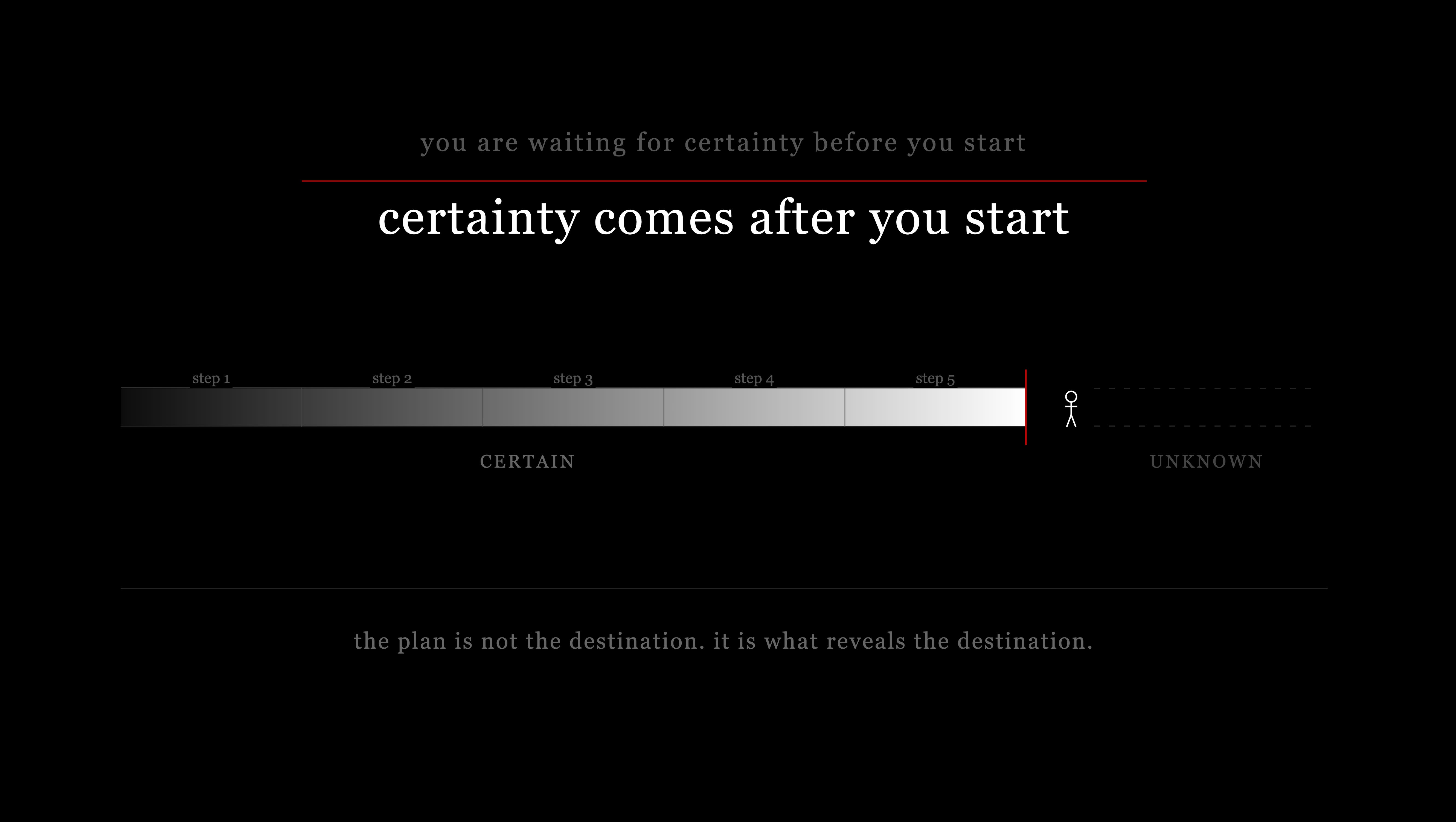
The plan is the prerequisite for certainty.
You will not find out what you are building toward by thinking about it.
You will find out by building.
Start there.
– Kal